From paper MAR to eMAR in your first week
Switching your medication record from paper to a tablet sounds risky. It doesn't have to be. Here's a five-day plan that keeps every dose accounted for.
The 8 AM med pass
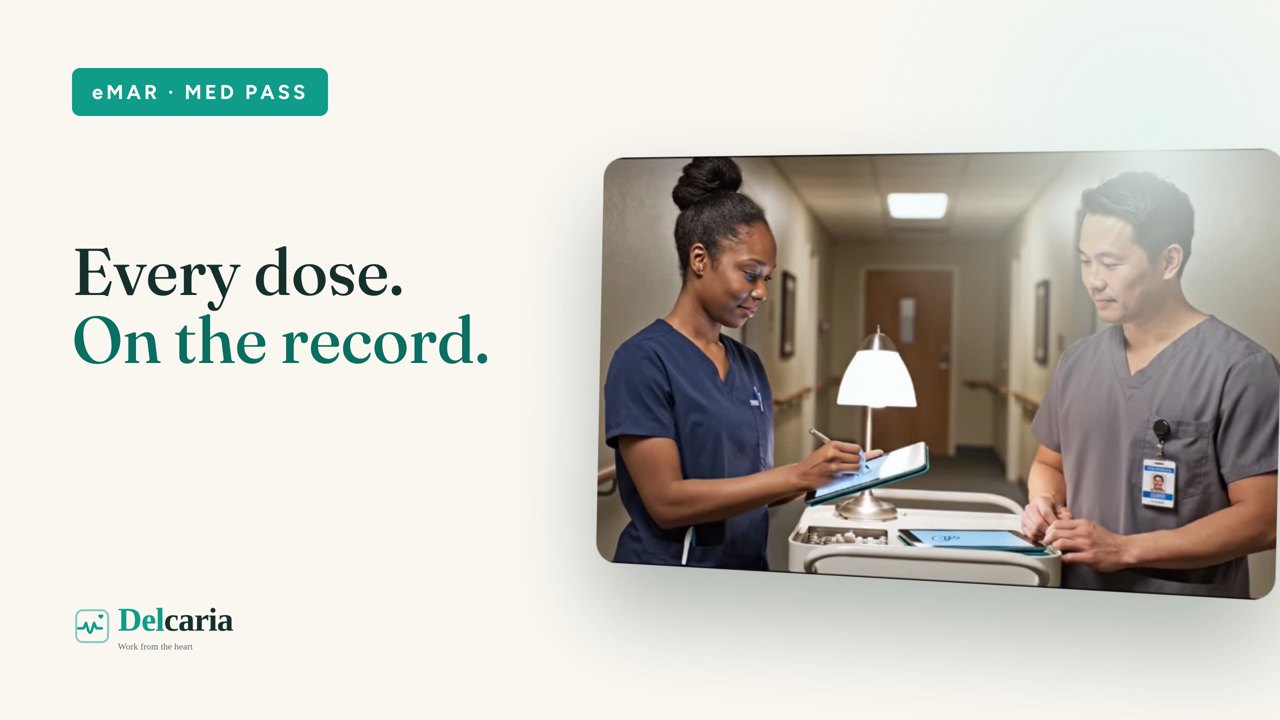
Resident by resident, allergies on top, every dose given, refused or held, and the LIC 622 in one tap.
First, what the record has to show
Title 22 tells you what your medication records must contain. It doesn't say they have to be on paper. Section 87465 asks for a record of each resident's centrally stored prescriptions, kept at least one year: the resident, the prescribing physician, the drug name, strength and quantity, the date filled, the prescription number and the pharmacy, plus any instructions. The state's own form for this, the LIC 622, uses the same fields.
Whatever system you use, those fields have to be there, and the record has to be available to Licensing on request.
One more thing before you start: your pharmacy doesn't need to be connected to go live. A nurse or the administrator can enter the current list once from the pharmacy printout and the bottles, check it, and you're running. A direct pharmacy feed can come later.
Day 1: Build the list from the bottles
For each resident, enter every current medication from the pharmacy printout, then check each one against the bottle in the cart. The label wins. If the printout and the label don't match, call the pharmacy before you go on. Remember that medications stay in the container they came in, and only the pharmacist changes a label.
Day 2: Check every PRN order
As-needed medications are where paper systems usually slip. Section 87465 requires a signed, dated physician order for every PRN medication, stating the symptoms, the exact dose, the minimum hours between doses and the maximum doses in 24 hours. The label has to say the same. Pull every PRN order on day two. Any order that's missing one of the four items goes back to the doctor before go-live.
Day 3: Set times and train the team
Set each resident's med pass times, then walk every med tech through a real pass on the tablet. Cover the basics the rules spell out: staff assist residents with medications they take themselves, residents can refuse, and medications are never hidden in food or drink without the resident's knowledge and consent. Every refusal gets recorded.
Day 4: Run both for one day
Keep the paper MAR for one more day and record each pass in both places. At the end of each shift, compare them. Any difference is something to fix now, not after you've put the binder away.
Day 5: Go live, and keep the paper
Switch to the tablet only. Don't throw out the paper records: keep the centrally stored medication record at least one year, destruction records at least three years, and resident records at least three years after a resident leaves.
Three slips to watch for
- Typos when entering the list. Check every entry against the bottle, not the printout alone.
- PRN doses with no follow-up. Record why the dose was given and how the resident did.
- Refusals left blank. A refused dose is still a recorded dose.
How Delcaria helps
Delcaria's eMAR lets staff look up a medicine by the NDC number on the bottle, takes pharmacy orders in the standard HL7 format with a nurse check before anything reaches the MAR, and puts late and refused doses on the Today list. Each resident's file shows their orders next to the last 14 days of doses.
See eMAR and med pass →Sources
- Title 22, section 87465: Incidental Medical and Dental Care Services
- CDSS form LIC 622: Centrally Stored Medication and Destruction Record
- Title 22, section 87506: Resident Records
- Title 22, section 87411: Personnel Requirements
This article is general information for California RCFE owners, not legal advice. Rules change, so check the current regulation text or ask your Licensing office before you rely on it.